- Green Digest
- Posts
- What's Happening in Sustainability & ESG (10.03 - 16.03) 🌎
What's Happening in Sustainability & ESG (10.03 - 16.03) 🌎
Geopolitical shocks reinforce the case for energy diversification

Green Digest
March 17, 2026

This week’s read time: 8 minutes
Welcome to this edition of Green Digest, where you will get updated about everything happening in the Sustainability & ESG space in less than 10 minutes. 🌎
We go through tons of articles and data from the most reliable sources, filter & simplify them, and serve them to you in bite-sized chunks every week. 🍀
PRESENTED BY SE ADVISORY SERVICES
AI for Sustainability: A Webinar on What Actually Delivers ROI

AI promises efficiency in sustainability – but where does it truly deliver value? Join our webinar March 24 to explore how finance-grade data, governance, and expert insight turn AI into measurable ROI and confident decarbonization decisions.
In this edition, we’ll cover:
• Geopolitical shocks reinforce the case for energy diversification ⚡️
• Analysis of over 1,100 CSRD reports shows sustainability disclosures becoming longer, more standardized, and more compliance-driven 📑
• Sustainable fund assets hit a record $4.13 trillion by end-2025, but their share fell to 6.5% as traditional funds attracted stronger inflows 📈
• BP is facing a potential legal challenge after excluding a climate-related shareholder resolution from its upcoming annual general meeting ⚖️
• and other news 🌍
PRESENTED BY BESIRIUS
A-list or not? What separates CDP leaders from everyone else

beSirius is running a 30-minute online session on Thursday, March 19 (3:00 PM CET): a diagnostic walkthrough of real CDP gap assessment data showing where companies lose an entire letter grade without realizing it and what A-listers actually do differently. Every attendee gets the CDP A-Lister Benchmark comparing A-list submissions against typical B/C scores across all 13 modules.
THIS WEEK’S TOP NEWS
Regulatory Oversight & Industry Insights
🌍 Recent geopolitical shocks have once again exposed the economic risks of global dependence on oil and gas, reinforcing the case for energy diversification.
The closure of the Strait of Hormuz, a key route for roughly 20% of global oil and gas shipments, triggered price spikes and supply disruptions, pushing Brent crude above $100, with shortages raising concerns over inflation, weaker growth, and heightened vulnerability, particularly in energy-importing regions like Asia.
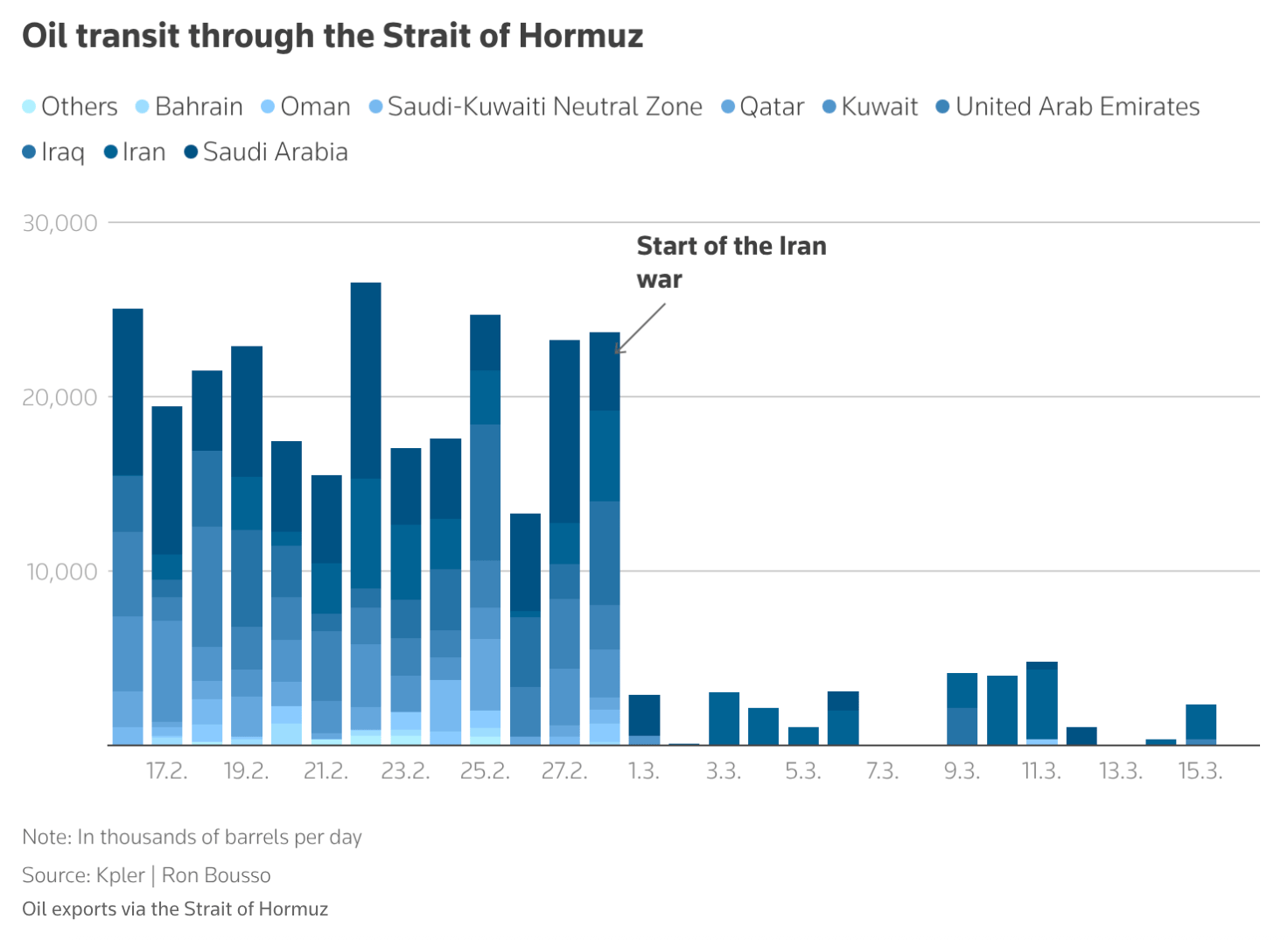
Source: Kpler | Ron Bousso | Graphic: Reuters
These recurring crises, following Russia’s invasion of Ukraine, are reshaping the global energy debate by highlighting the need for greater energy security alongside climate goals; while fossil fuels still account for nearly 60% of global demand and a rapid transition remains unrealistic, governments are increasingly pursuing domestic and diversified energy systems, with renewables playing a central role, suggesting that energy security concerns may ultimately accelerate the shift toward a more resilient and balanced energy mix.
Corporate leaders are also emphasizing that energy dependence is now a core business risk, with companies increasingly turning to renewables, long-term power purchase agreements, and on-site generation to secure stable, lower-cost energy; as supply chain disruptions intensify, many firms view this moment as a structural shift, accelerating investments in clean energy not just for sustainability goals but for resilience and long-term competitiveness.
Markets and demand trends reinforce clean energy momentum
The renewable energy sector may have lost a few battles, but it is increasingly winning the bigger war. With oil prices rising above $100 per barrel as disruptions in the Strait of Hormuz tighten global supply, the need for alternatives like solar and wind has become more visible, and markets are reacting accordingly: the iShares Global Clean Energy ETF rose 59.52% over the past year, significantly outperforming the S&P 500 at 18.81%.
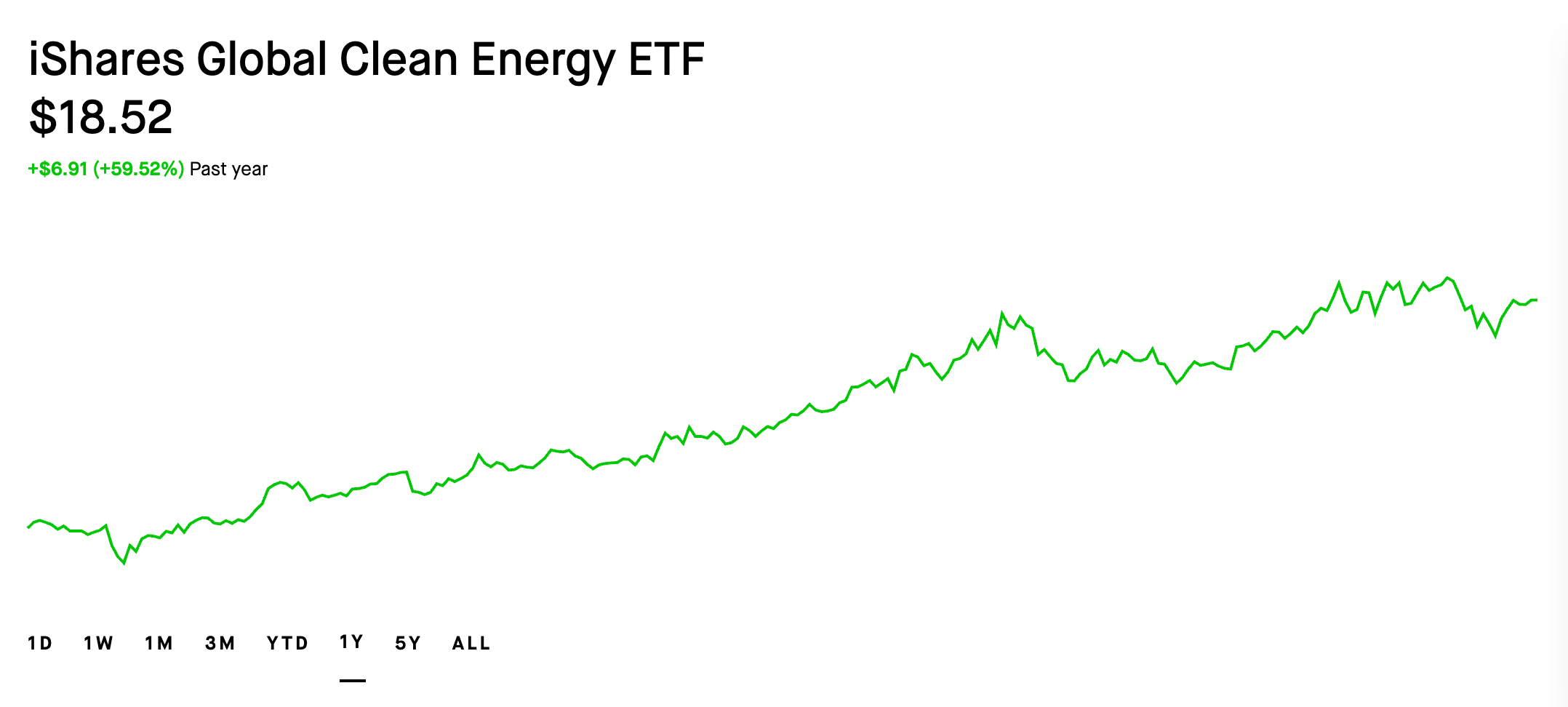
iShares Global Clean Energy ETF 1-year performance | Graphic: Robinhood
Electricity demand is also already surging, driven in large part by the rapid expansion of AI data centers, which are straining existing grids and slowing development due to limited capacity, highlighting the need for new energy sources; despite political pressure on renewables in the US, global momentum continues, with Bloomberg projecting renewed growth in solar installations this year and the International Energy Agency reporting a record $780 billion invested in clean energy, exceeding spending on oil and gas.
Nuclear power gains renewed relevance
EU Commission President Ursula von der Leyen announced a new strategy to accelerate advanced nuclear development, calling Europe’s decline in nuclear power a “strategic mistake.” The plan focuses on deploying small modular reactors by the early 2030s through measures including regulatory sandboxes, cross-border rule alignment, and a €200 million guarantee mechanism to support private investment, as the EU seeks to combine nuclear and renewables to strengthen energy security and low-carbon power supply.
The AI boom is also pushing environmental groups to cautiously support nuclear power after decades of resistance. In the US, the Natural Resources Defense Council signaled cautious support for restarting a nuclear power plant in Iowa to supply electricity for Google’s AI data centers, marking the first time the group has backed an individual nuclear facility. NRDC said the plant’s restart could reduce reliance on coal and natural gas as power demand rises. While the group continues to raise concerns about safety and nuclear waste, it stated the project could deliver climate and consumer benefits if strict post-Fukushima safety measures are implemented.
MORE INTERESTING NEWS
Latest developments, reports, insights, and trends

📊 Analysis of over 1,100 early CSRD reports shows sustainability disclosures becoming longer, more standardized, and more compliance-driven. Compared to previous voluntary reports, CSRD filings are about 30% longer, more aligned with financial reporting, and less narrative-focused, with companies relying heavily on Big Four firms for required third-party assurance. While standardization improves comparability and benchmarking for investors, it limits companies’ ability to tell broader sustainability stories, leading many to publish additional reports alongside CSRD filings. The shift is also improving data quality, with companies restating metrics as they adopt more consistent methodologies and stronger data verification practices.
🇺🇸 The US Justice and Transportation Departments filed a federal lawsuit seeking to block California rules requiring automakers to cut fleetwide CO2 emissions and increase zero-emission vehicle sales. The move continues the Trump administration’s efforts to dismantle state and federal EV policies, arguing that California’s standards conflict with federal authority over fuel economy, and asking the court to declare the rules unlawful and prevent similar regulations in the future.
WHAT ARE COMPANIES DOING?
Corporate sustainability, new tools and services & companies in the news
A BP gas station with its green logo signage | Credit: Getty Images
⚖️ BP is facing a potential legal challenge after excluding a climate-related shareholder resolution from its upcoming annual general meeting. The resolution, filed by climate-focused shareholder group Follow This and backed by 16 institutional investors, asked the company to explain how it plans to protect shareholder value if global oil and gas demand declines. Although the proposal had initially been accepted, it was ultimately omitted from the AGM notice, prompting accusations from investors that BP is undermining shareholder rights.
Follow This has given BP an ultimatum to include the proposal or face legal action, arguing the move is unprecedented in the UK and reflects a broader backlash against shareholder climate activism. BP said the board excluded the resolution after legal advice that it did not meet legal requirements, while critics warn that sidelining such proposals could weaken investor oversight and escalate tensions between oil companies and shareholders over climate transition strategies.
🧱 The LEGO Group reported that renewable and recycled materials accounted for 52% of the inputs used to produce its bricks in 2025, up from 33% the previous year. The progress, outlined in the company’s Sustainability Statement, reflects expanded use of certified renewable feedstocks through a mass balance approach and increased sustainability investment.
✈️ Rolls-Royce SMR and Equilibrion signed an MOU to assess the feasibility of producing sustainable aviation fuel (SAF) using small modular nuclear reactors. The collaboration will explore whether SMR-powered plants can enable large-scale production of synthetic aviation fuel through power-to-liquids technology. The concept could produce over 160 million liters of SAF annually per reactor, helping scale low-carbon aviation fuel as the industry struggles with high costs and limited supply.
⚡️ Octopus Energy Generation expanded its carbon removal partnership with Cultivo, committing an additional $60 million to nature-based projects and bringing the total partnership to $100 million. Cultivo uses technology to identify and structure nature restoration projects, including grassland regeneration, afforestation, agroforestry, and mangrove restoration, into investable opportunities.
📦 FedEx launched a reusable packaging system for B2B shipping, designed to replace single-use materials with durable, collapsible boxes developed with Returnity. Each box can be reused up to 50 times, reducing packaging costs by up to 30% per cycle and emissions by 64%–88%, with pilots in North America showing improved efficiency and lower damage rates; the solution is now available in the US, with plans to expand to Australia and Europe.
Solutions
📊 EcoVadis and Watershed announced a strategic partnership to help companies access more accurate Scope 3 emissions data across their supply chains. The collaboration integrates EcoVadis’ supplier carbon metrics with Watershed’s carbon accounting platform, enabling companies to replace industry averages with supplier-specific emissions data and make more informed low-carbon sourcing and supply chain decarbonization decisions.
📊 Position Green launched an ROI Calculator to help companies quantify the financial and emissions impact of decarbonization investments. Based on a model from the Stockholm School of Economics, the tool translates climate initiatives into metrics such as ROI, net present value, payback period, carbon tax savings and emissions reductions, enabling companies to test scenarios and build stronger financial cases for sustainability investments.
EVERYTHING FINANCE
Sustainable finance, funding rounds, acquisitions & private equity deals
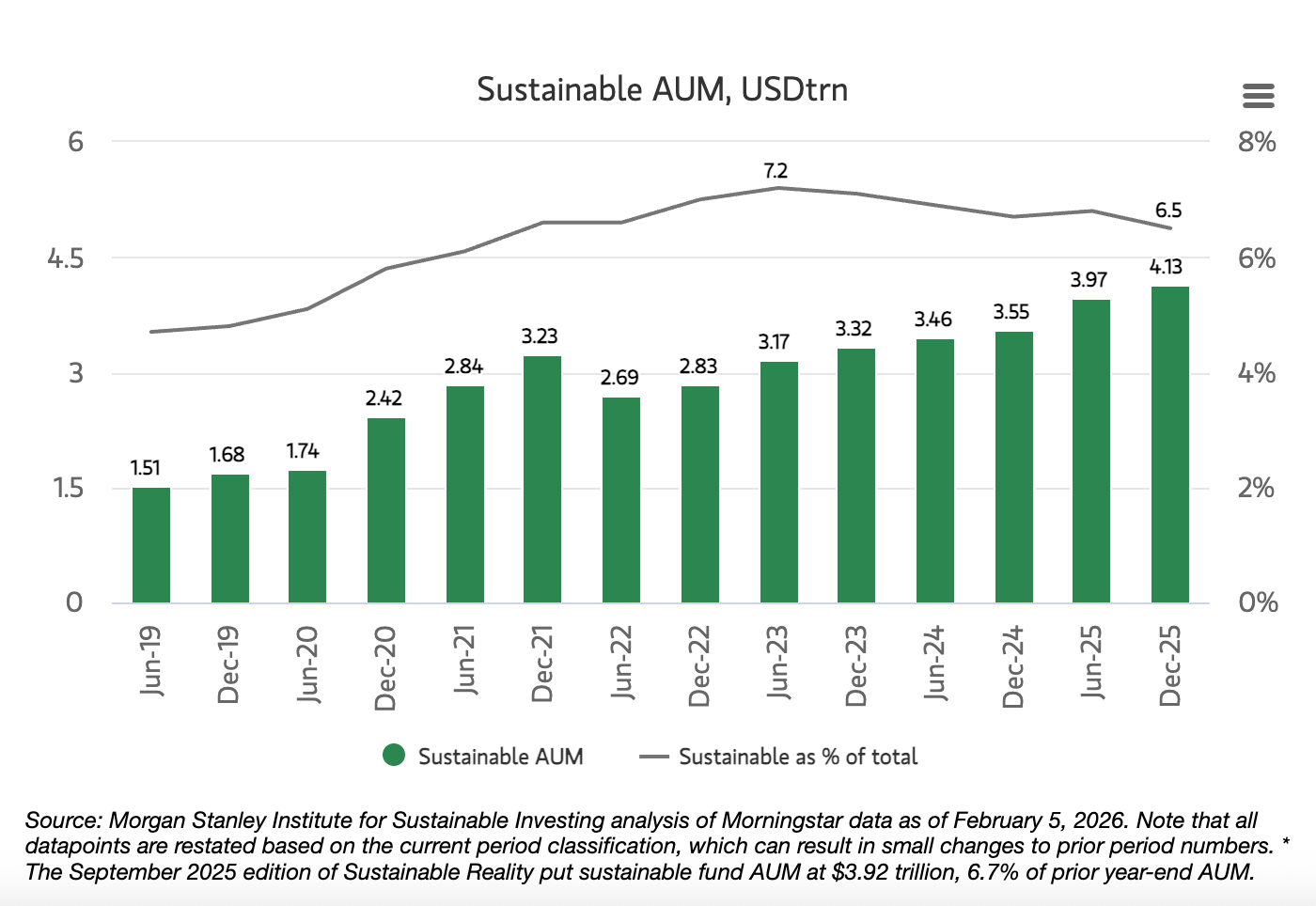
Source & Credit: Morgan Stanley
📈 Sustainable fund assets hit a record $4.13 trillion by end-2025, but their share fell to 6.5% as traditional funds attracted stronger inflows, according to Morgan Stanley. Despite earlier gains, sustainable funds saw $86.4 billion in net outflows in 2H 2025, including first-time outflows in Europe largely due to reallocations, while performance remained close to traditional funds, returning 5.3% versus 5.5%, with regional differences shaping results.
📈 The Net Zero Asset Owner Alliance released an updated Target-Setting Protocol to strengthen how investors align portfolios with net zero by 2050. The new framework introduces transition targets supporting high-emitting companies with credible decarbonization plans, expands the four-pillar target approach, and increases focus on carbon removals and engagement, reflecting a shift from simple emissions reduction toward broader portfolio transition strategies.
🇬🇧 The UK government raised £6.25 billion through a new Green Gilt bond maturing in 2037 to finance climate and environmental projects. The issuance, the first new maturity since the program launched in 2021, brings total green gilt funding to £55.8 billion and follows an updated Green Financing Framework that now includes nuclear energy projects among the eligible uses of proceeds.
M&A
🏗️ Bureau Veritas acquired UK-based sustainability consultancies Verte and Sustainable Construction Services to expand its sustainable buildings and infrastructure capabilities. The firms specialize in services such as BREEAM certification, energy performance analysis, embodied carbon assessments and net-zero strategies, supporting Bureau Veritas’ LEAP | 28 strategy to grow high-value sustainability services and strengthen its position in the UK buildings and infrastructure market.
Funds
⚡ Copenhagen Infrastructure Partners raised €1.3 billion at the first close of its CI Green Credit Fund II to finance renewable energy and energy transition projects. The fund, targeting €2 billion in total, provides credit to renewable infrastructure and energy-transition companies across Europe, North America, and parts of Asia-Pacific.
⚡ France-based investment firm RGREEN INVEST raised more than €900 million for its Infragreen V fund to finance renewable energy, storage, and electrification projects across Europe. The fund targets mid-market infrastructure investments, particularly in Central and Eastern Europe.
💧 Emerald Technology Ventures raised €100 million for its Global Water Fund II to invest in startups tackling global water challenges. The fund targets early- to growth-stage companies developing solutions across the water value chain, including treatment, reuse, digital monitoring, and infrastructure resilience.
Startup funding rounds
🌳 Rainforest Builder UK closed a Series A funding round led by BNP Paribas Asset Management Alts to expand its ecosystem restoration and carbon removal projects in West Africa. The company restores degraded tropical forests and generates carbon credits, with more than 1.8 million trees planted across projects in Ghana, Sierra Leone, and Guinea.
⚡ ReNew Green raised $95 million to expand clean power supply for corporate customers in India. The investment will help scale renewable energy projects for businesses such as Microsoft, Amazon, and Google.
🏭 Clean iron startup Electra secured $30 million in venture debt from J.P. Morgan to advance commercialization of its low-carbon ironmaking technology. The company uses a low-temperature electrochemical process powered by renewable energy to produce high-purity iron without coal.
🛰️ Space tech startup AIRMO raised €5 million in seed funding to support the launch of its first satellite mission for methane monitoring in 2027. The company develops airborne and space-based technology to detect greenhouse gas leaks with high precision, helping energy companies identify methane emissions, with its system already used by firms such as Uniper and Total to monitor energy infrastructure.
Did you like today's newsletter? |
PARTNER WITH US

Increase your brand awareness and visibility by reaching the right audience and target market. Showcase your company, solutions, services, products, reports, surveys, events, or other content in front of our highly targeted audience of +6,500 Sustainability & ESG professionals. Contact us at [email protected] if you think we can partner in some way.